And What is the New AT “Carer-Burden”
When AT Is Better Than Home Mods (Real Case Comparisons)
Over the last 12 months as the Aussie AT-HM transition was approaching, we saw a growing pattern:
Assistive Technology often delivers better outcomes than home modifications — certainly faster, safer, and at a fraction of the cost.
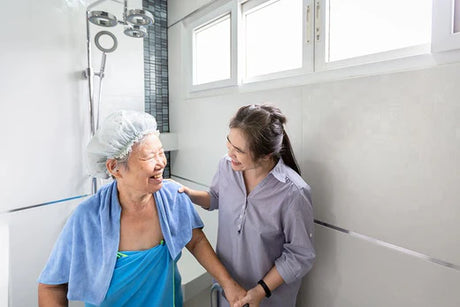
CASE COMPARISON: Small Bathroom + 2 Carers Assisting

CASE COMPARISON: High Falls Risk + Rental Property
- Home Mod option: Not permitted by landlord OR requires reinstatement at end of tenancy.
- AT option: Shower chair + transfer bench or sliding system — no structural changes.
- Outcome: AT is the only viable path and reduces transfer risk by more than 80%.
CASE COMPARISON: Urgent Hospital Discharge
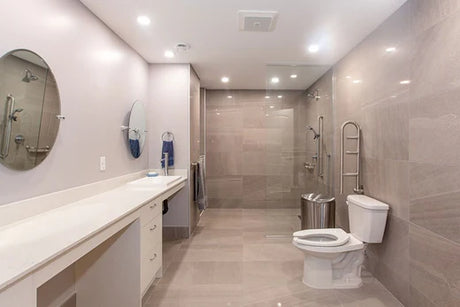
- Home Mod option: Not possible in required timeframe, client has a single bathroom older inner-city villa with a shower over the bathtub.
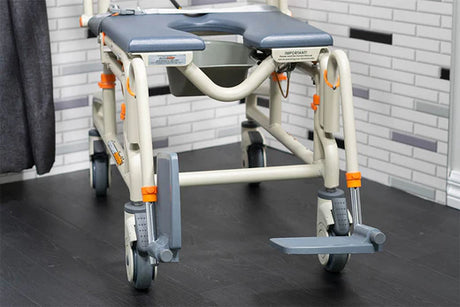
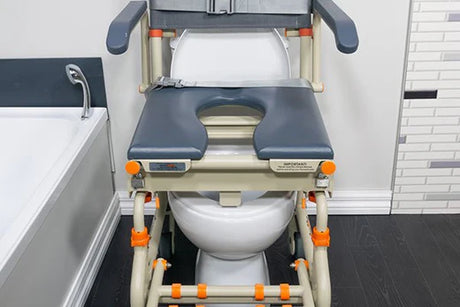
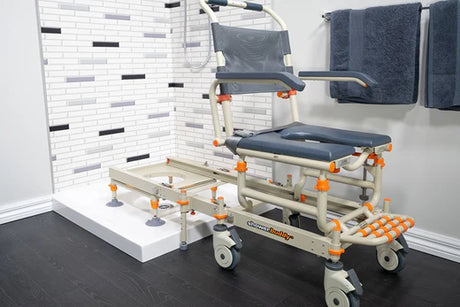
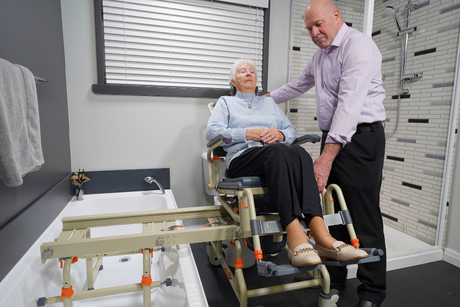
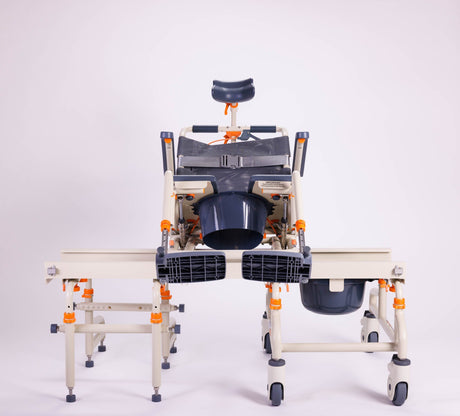
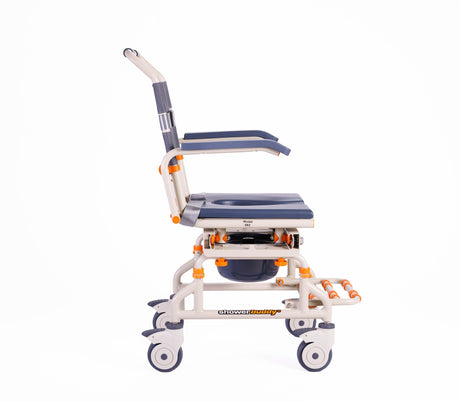
- AT option: Mobile, sliding transfer shower chair, to slide client over the bathtub to shower, bedside commode option also utilised.
- Outcome: Same-day discharge supported; OT delivers measurable risk reduction within hours.

Bottom line: In most real-world bathroom scenarios, AT solves the problem faster than a home modification, with less risk, less cost, and much clearer justification.
New AT “Carer-Burden” Requirements
How to Show It Clearly
Under the new framework, planners are increasingly prioritising carer burden as a funding trigger — but they require it to be shown clearly, objectively, and with measurable impact.
What OTs now need to demonstrate
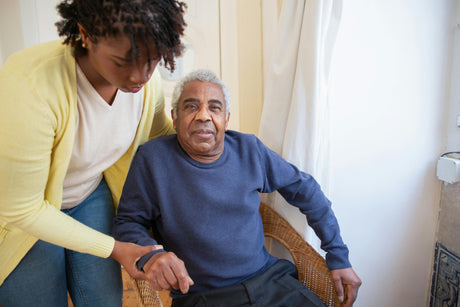
✏️ Carer load before AT (e.g., lifting forces, unsafe reach, twisting, step-over shower lip, 2 carers needed)
✏️ Carer load after AT (e.g., reduced or no lifting, straight-line transfer, height-adjusted seating)
✏️ Quantified difference (e.g., “Carer strain reduced from moderate–high to minimal.”)
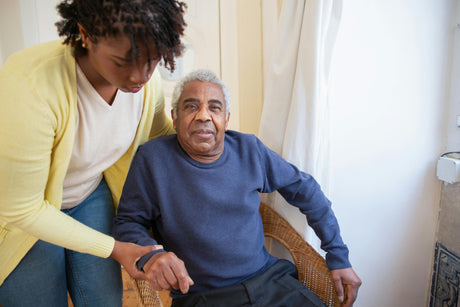
✏️ Impact on sustainability of care (e.g., preventing carer injury, reducing fatigue, enabling ongoing support, carer participation reduced from 2 to 1)
Best way to document it
- Use before/after transfer diagrams (simple sketches are enough)
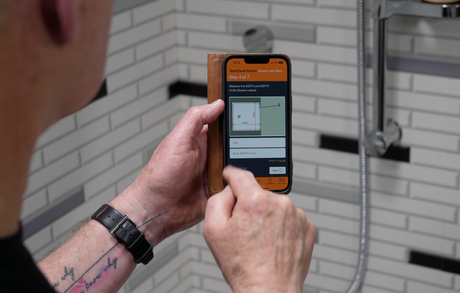
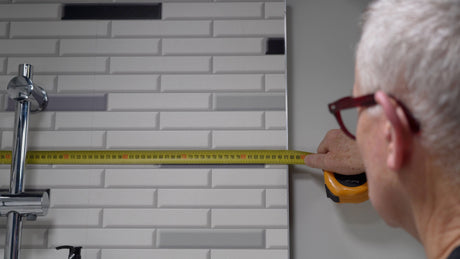
- Record distance, angles, task duration, and forces
- Link strain reduction to maintaining informal care
🚫 Avoid vague wording like “easier,” “more comfortable,” “better access” — these no longer satisfy reviewers

Consider wording and descriptions:

AT that scores highly on carer-burden reduction
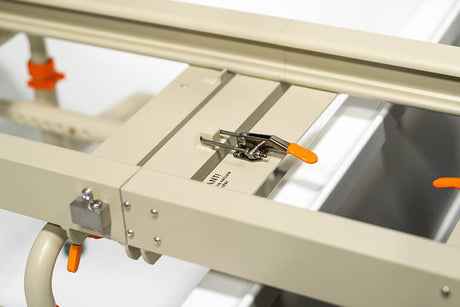
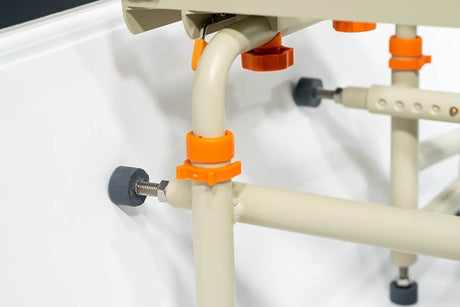
- Showerbuddy SB1/SB2/SB2T sliding transfer systems
- Tilt-in-space for hygiene tasks (SB2T and Roll-in SB3T)
Tip: The clearer the carer-burden reduction, potentially the faster the approval — especially when multiple informal carers are involved.

The “Immediate Safety” Rule
(Why It’s Becoming the #1 Funding Trigger)
Under the Australian Support-at-Home and AT-HM funding, assessors are prioritising Immediate Safety above nearly everything else.
What it means
Any imminent risk of:
- Falls
- Unsafe transfers
- Carer injury
- Unstable seating
- Wet-area hazards
- Inability to access toilet/shower safely
These may now be considered a fast-track justification for AT.
How to use this rule effectively
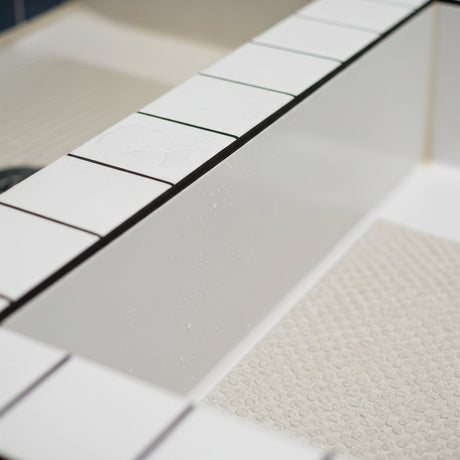
- State the immediate risk clearly: “Client risks a fall when stepping over 80mm shower hob due to poor clearance and weak quads.”
- Link the risk directly to the recommended AT: “SB1 Showerbuddy sliding transfer system removes the step-over entirely and creates a level seated transfer for over the toilet and safe shower access.”
- Show the consequence of inaction: “Without immediate intervention, the client faces high likelihood of injury and inability to remain safely at home.”
- Document why other options don’t meet immediacy needs: Home mods are too slow Carer not available at all times Rental property Risk occurring daily
This is quickly becoming the most decisive factor in approvals.
Bonus Section
AT for Clients with Cognitive Impairment
What Works (and What Doesn’t)
Bathroom tasks create unique challenges for clients with cognitive impairment — particularly sequencing, orientation, and unsafe standing.
Here’s what consistently works:
What works well
✔️ Stable, consistent seating positions (Shower chairs with defined boundaries reduce wandering and unsafe stepping)
✔️ Clear transfer pathways SB1/SB2/SB2T systems from Showerbuddy, RAZ Trakz sliders and NuProdx sliders all eliminate complex steps, improving compliance.
✔️ Tilt-in-space for clients who lean or fatigue Improves tolerance and reduces agitation.
✔️ Non-slip, non-complex environments The fewer visual “changes,” the calmer the client.
What doesn’t work
✖️ Too many adjustment points Clients may fiddle, undo straps, or stand unexpectedly.
✖️ Open walk-in showers with no seating plan Leads to wandering, mis-stepping, impulsive standing.
✖️ Equipment that looks “clinical” Can increase anxiety; avoid metal or chrome, polished looks with hard features and clinical overtones, look for softer colours and a simple design, this may be accepted easier and create less resistance and stress.
✖️ Unfamiliar transfer tasks If the method is new or not reinforced by caregivers, compliance drops.
In Summary
The landscape is shifting: AT is being favoured over home mods due to speed, safety, cost, and defensibility.
OTs who show clear carer-burden reduction and immediate safety benefits are getting faster approvals and better outcomes.
For clients with cognitive impairment, the right AT can dramatically improve safety and reduce behavioural/transfer risks — but equipment selection must remain simple, stable, and predictable.
Coming Up Next in Access Insights
In the next issue, I’ll cover:
- AT versus Support Hours
- Sustainability of Informal Care
- When Standing Transfers Should Be Replaced with Seated Transfers
- Bathroom Design Mistakes OTs Keep Encountering
Thank you for reading Access Insights.
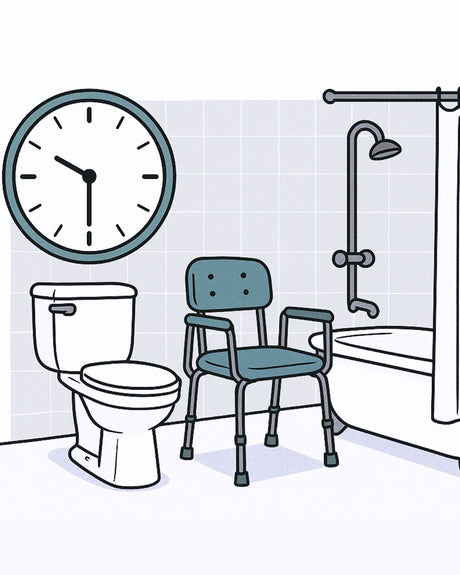
My goal is to support therapists and to help clients stay safe at home — without the delays and confusion the system often creates. In researching this article and developing some images I also use AI.
Thank you for supporting Showerbuddy, the whole team is there to help you.
Barry Redican CEO — Showerbuddy
Contact us for any assistance or to arrange OT Training … admin@shower-buddy.com
Safe access. Smart design. Real independence.
#NDIS #SupportAtHome #OccupationalTherapist #Showerbuddy #AssistiveTechnology #AgedCare #BathroomSafety





![Toilet Training A Young Child With Mobility Challenges [And How A Shower Chair Can Help]](http://shower-buddy.com/cdn/shop/articles/toilet-training-disabled-child_520x500_a90e5234-d372-435d-aa56-8da15dd3836c.webp?v=1722557239&width=460)